
Best for checking statutory severance: Ontario’s Ministry of Labour severance pay calculator. Best for a broad common-law estimate: Samfiru Tumarkin’s Severance Pay Calculator. Best companion tool: Ontario’s termination pay calculator. For a dismissed executive in 2026, these tools answer different questions; none determines the full value of a termination package.
- The best severance pay calculator for executives Ontario offers depends on whether you need statutory minimums or a common-law estimate.
- Ontario’s severance pay calculator checks statutory severance, not the complete value of an executive’s dismissal claim.
- Samfiru Tumarkin’s Severance Pay Calculator provides an initial estimate, not a contract or equity-plan review.
- Before approaching Wise Law, gather your employment agreement, compensation plans, termination letter and proposed release.
Why this matters
An executive’s severance estimate is incomplete until the employment contract and compensation plans have been reviewed. A salary-based result does not resolve bonus entitlement, equity treatment or the enforceability of a termination clause.
If you are considering Wise Law, use a severance pay calculator to organize your questions—not to decide whether to sign a release. The important distinction is between the employer’s statutory obligations and any additional contractual or common-law entitlement.
This guide addresses provincially regulated Ontario employment in 2026. Federally regulated employment, including many banking and telecommunications roles, follows a different statutory framework. Confirm jurisdiction before entering figures into an Ontario calculator.
What makes the best severance calculator for executives?
Judge the tools against these criteria before comparing their results:
- Legal scope: Does the tool calculate statutory termination pay, statutory severance pay or an estimated common-law notice period?
- Eligibility checks: Does the calculation account for the legal conditions attached to the payment being estimated?
- Compensation coverage: Does the result address only salary, or does it explain how other compensation should be considered?
- Contract limits: Does the tool distinguish an estimate from an assessment of an enforceable termination provision?
- Transparent limits: Can you tell what the result excludes without treating the output as a settlement recommendation?
For executives, compensation coverage and contract limits deserve particular attention. A calculator can perform arithmetic correctly while answering the wrong legal question.
Best severance calculators at a glance
| Rank and option | Best for | Standout use | Key limitation |
|---|---|---|---|
| 1. Ontario Ministry of Labour severance pay calculator | Checking statutory severance | Estimating the separate severance entitlement under Ontario’s Employment Standards Act, 2000 | Does not calculate common-law reasonable notice or settle contract disputes |
| 2. Samfiru Tumarkin’s Severance Pay Calculator | Starting a common-law discussion | Getting an initial estimate beyond statutory minimums | An automated estimate cannot determine enforceability or interpret compensation plans |
| 3. Ontario Ministry of Labour termination pay calculator | Checking individual statutory termination pay | Separating termination pay from statutory severance | Does not value the complete executive package; mass-termination rules require separate attention |
The official calculators rank first for their defined statutory purposes, not because statutory minimums necessarily represent your full entitlement. The common-law estimator serves a different purpose and should not be read as a competing calculation of the same obligation.
1. Ontario severance pay calculator: best for statutory severance
Ontario’s Ministry of Labour severance pay calculator addresses statutory severance under the Employment Standards Act, 2000. This is a specific entitlement, separate from statutory termination pay and any additional common-law damages.
Under the Act, statutory severance generally requires at least 5 years of employment, plus a qualifying employer-payroll condition or a qualifying business closure. The payroll threshold is $2.5 million. The alternative closure condition concerns the permanent discontinuance of all or part of a business and the severance of 50 or more employees within 6 months.
These are eligibility conditions, not a prediction of an executive’s settlement. The statutory severance maximum is 26 weeks, and that ceiling does not cap every possible dismissal entitlement.
Ontario severance calculator pros:
- Comes from the provincial ministry responsible for employment standards.
- Focuses on a defined statutory payment rather than an unexplained overall settlement figure.
- Helps you distinguish statutory severance from termination pay.
Ontario severance calculator cons:
- Does not determine common-law reasonable notice.
- Does not decide whether your termination clause is enforceable.
- Does not interpret disputed bonus, equity or change-of-control provisions.
Best for: An executive checking whether an offer addresses statutory severance before evaluating the rest of the package.
For a 2026 dismissal, use the current official tool and its accompanying instructions. Payroll eligibility and service calculations deserve attention before you rely on the output.
Verdict: Hold any acceptance decision until statutory severance has been separated from the full package.
2. Samfiru Tumarkin’s calculator: best for an initial broader estimate
Samfiru Tumarkin’s Severance Pay Calculator is a starting point for exploring potential severance beyond statutory minimums. Treat the result as an initial estimate for a legal discussion, not a finding that your employer owes a particular amount.
Common-law reasonable notice considers factors including age, length of service, the character of employment and the availability of comparable work, having regard to the employee’s experience, training and qualifications. An enforceable employment agreement can change the analysis substantially.
Samfiru Tumarkin calculator pros:
- Introduces the distinction between statutory minimums and broader potential entitlement.
- Gives you a starting point for questions about reasonable notice.
- Helps frame why a statutory calculation alone does not resolve every dismissal.
Samfiru Tumarkin calculator cons:
- Cannot determine whether a disputed termination clause is enforceable.
- Cannot resolve the meaning of your particular incentive-plan documents.
- Does not establish litigation outcomes or the value of accepting a settlement now.
Best for: An executive who understands the statutory baseline and wants an initial common-law discussion point.
Do not assume a larger estimate is more accurate. If a 2026 estimate differs from your employer’s offer, identify the reason: notice duration, compensation included, contractual restrictions or another legal issue. Comparing totals without comparing assumptions conceals the actual dispute.
Verdict: Hold reliance on the estimate until the contract and compensation documents have been assessed.
3. Ontario termination pay calculator: best for the notice baseline
Ontario’s Ministry of Labour termination pay calculator addresses statutory termination pay. That payment generally substitutes for required statutory notice when an employer ends employment without providing the required working notice, subject to the Act’s rules and exemptions.
For individual terminations, statutory notice generally reaches a maximum of 8 weeks after 8 years of employment. Separate mass-termination provisions can apply. The individual-notice maximum is not a ceiling on common-law reasonable notice.
Ontario termination pay calculator pros:
- Addresses a statutory obligation that is distinct from severance pay.
- Helps you check the individual-notice component of an offer.
- Provides a useful companion to the ministry’s severance calculation.
Ontario termination pay calculator cons:
- Does not calculate statutory severance as part of the same legal entitlement.
- Does not determine common-law damages.
- Does not replace an assessment of exemptions, mass termination or disputed compensation.
Best for: An executive checking the statutory notice component, particularly when the employer’s letter uses the word severance without explaining its components.
Ask whether the employer has provided working notice, pay instead of notice or a combination. Also distinguish cash payments from benefit-continuation obligations. A single headline figure does not explain how each obligation is being met.
Verdict: Hold any conclusion about the total package; use this tool only for its statutory notice purpose.
How these calculators were ranked
The ranking prioritizes a clear legal purpose, identifiable limits and usefulness to a dismissed executive. It does not rank tools by the size of the estimate they produce.
The official severance calculator takes the first position for checking statutory severance. Samfiru Tumarkin’s calculator supplies a broader discussion point, while the official termination calculator checks a separate statutory component. No calculator ranks as a complete executive-package assessment.
Turn a calculator result into a useful package review
For a 2026 termination package, use the following sequence before deciding what an estimate means. Keep the employer’s original documents together rather than relying on a summary in an email.
Confirm jurisdiction
Determine whether Ontario’s employment standards legislation governs the employment. Your office location alone does not settle this question; the nature of the employer’s undertaking matters.
Check minimums
Separate statutory termination pay, statutory severance and benefit-continuation obligations. Do not add an estimated common-law amount to statutory payments automatically: statutory entitlements generally form part of the overall notice-related recovery rather than an extra layer on top.
Read contracts
Gather the original employment agreement and later amendments. Include promotion letters and any documents changing compensation or termination terms; the relevant agreement is not always the oldest document in your file.
Map compensation
List salary, bonus, commissions, equity, pension contributions and benefits where applicable. For each component, record the governing document and the employer’s proposed treatment rather than assuming every item follows salary.
Review the release
Compare the proposed payment with the rights the employer asks you to release. Separate statutory amounts from additional consideration and identify any continuing confidentiality, non-solicitation or other obligations requiring attention.
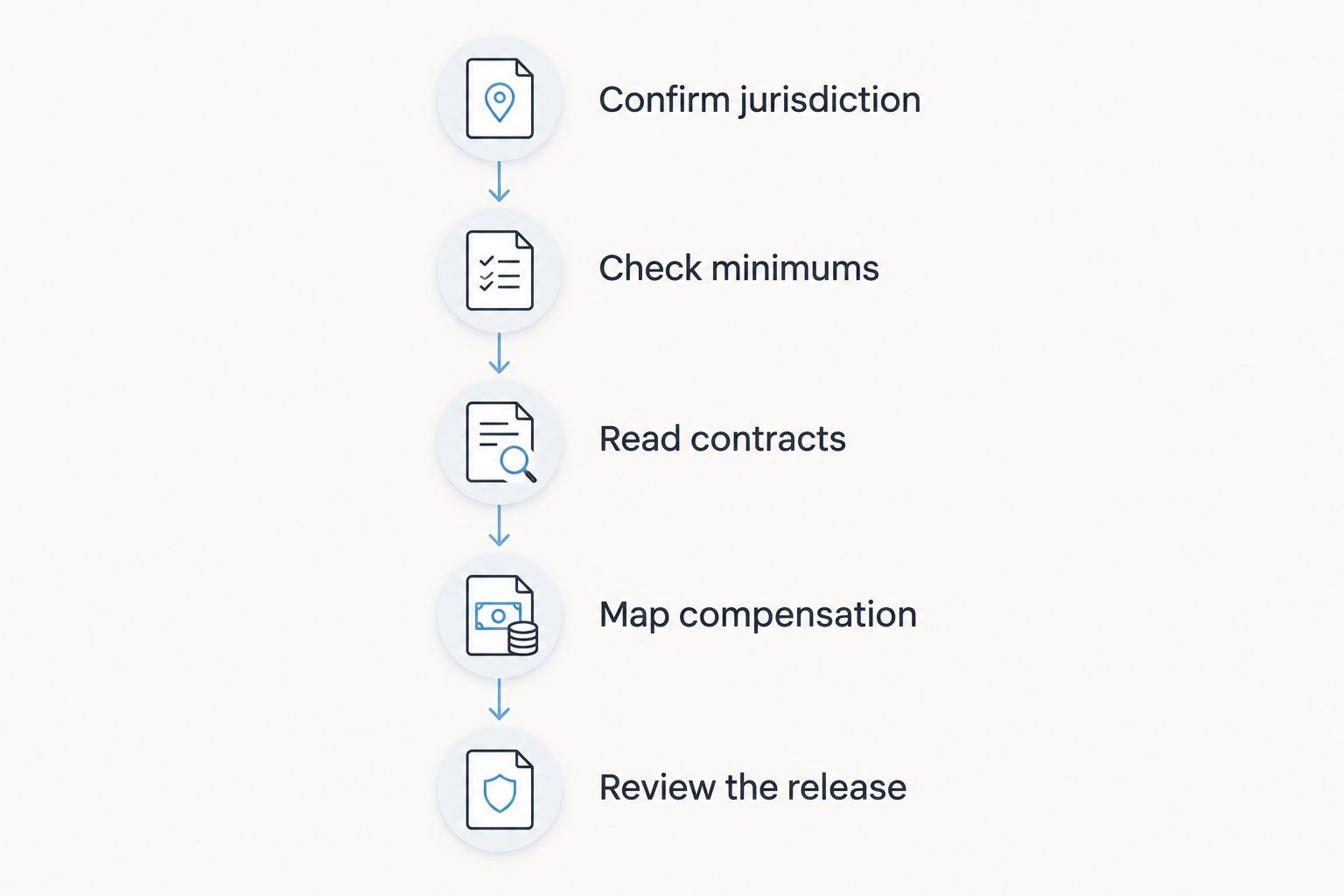
This sequence gives Wise Law and a severance pay calculator different roles: the calculator supplies a limited estimate, while your documents supply the issues that need legal assessment. Keep those roles separate when preparing questions.
The executive compensation issues calculators leave unresolved
Bonus and commissions
A dismissal calculation requires more than copying your latest salary figure. The legal treatment of incentive compensation depends on the applicable entitlement and the wording of the governing documents.
Ask whether the employer’s offer includes earned but unpaid compensation and whether additional incentive compensation forms part of notice-period damages. Those are related questions, but they are not interchangeable.
Equity and vesting
Options, restricted share units and other awards require document-specific review. Grant agreements and plan terms can address vesting, termination, exercise deadlines and treatment following a corporate transaction.
Do not convert an equity balance into a guaranteed severance amount. Separate what has vested, what remains contingent and what the employer proposes to cancel or preserve.
Mitigation and settlement structure
Common-law damages can be affected by mitigation, including earnings from replacement employment. Statutory entitlements follow different rules.
Also read how the proposed payment works. A lump-sum offer and salary continuation can produce different contractual consequences, particularly where an offer contains repayment, reporting or clawback terms. A calculator total does not resolve those terms.
Which severance calculator should you choose?
Choose Ontario’s official severance pay calculator for the statutory severance question, and its termination pay calculator for the statutory notice question. Use Samfiru Tumarkin’s calculator only as an initial reference for a broader common-law discussion.
For an executive facing a 2026 dismissal, the decisive next step is a document-based assessment before signing a release. If you approach Wise Law, bring the calculator result alongside the underlying agreements—not instead of them.
Prepare for your severance review
Gather your employment agreement, incentive plans, termination letter and proposed release.
FAQ
What’s the best severance pay calculator for executives in Ontario?
Ontario’s Ministry of Labour severance pay calculator is the clearest starting point for statutory severance. For a broader initial estimate, Samfiru Tumarkin’s calculator serves a different purpose; neither replaces assessment of an executive’s contract and compensation plans.
Are termination pay and severance pay the same in Ontario?
No. Ontario’s Employment Standards Act, 2000 treats termination pay and statutory severance as separate entitlements with different eligibility and calculation rules. A termination package can also involve contractual or common-law rights.
Does the statutory severance maximum cap an executive’s entire claim?
No. The 26-week statutory severance maximum does not cap all contractual or common-law dismissal entitlements. The applicable employment agreement and legal framework determine the broader analysis.
Can an executive calculator include bonuses and stock options accurately?
A calculator cannot resolve disputed bonus or equity-plan wording. Gather the relevant plans and grant agreements so each compensation component can be assessed separately.
Is an executive automatically entitled to a month per year of service?
No. Common-law reasonable notice is not determined by a fixed month-per-year formula. Relevant factors include age, service, the character of employment and the availability of comparable work, subject to any enforceable contractual terms.
Should I sign a release if the offer matches a calculator?
A matching calculator result is not a sufficient reason to sign a release. Review the contract, compensation treatment, payment conditions and rights being released before accepting.
Do Ontario calculators apply to federally regulated executives?
Ontario statutory calculators are not the appropriate statutory tools for federally regulated employment. Confirm the governing jurisdiction before calculating minimum entitlements.
One last thing
Ask the employer to itemize the offer before comparing it with any calculator. Request a breakdown of statutory termination pay, statutory severance, additional compensation, benefits and incentive treatment. An itemized offer exposes the question that a single total hides: what, exactly, are you being paid to give up?